

“I need a different kind of love,” Lott sings at the start of “A Different Kind of Love”, the lead single. But what reads as a self-serving plea turns on its head as the song becomes a confession.
“What loudly righteous prayers from this coward’s lungs,” Lott sings in the final moments, in what feels like an admission of the many things that are said to be done in love that hurt others.
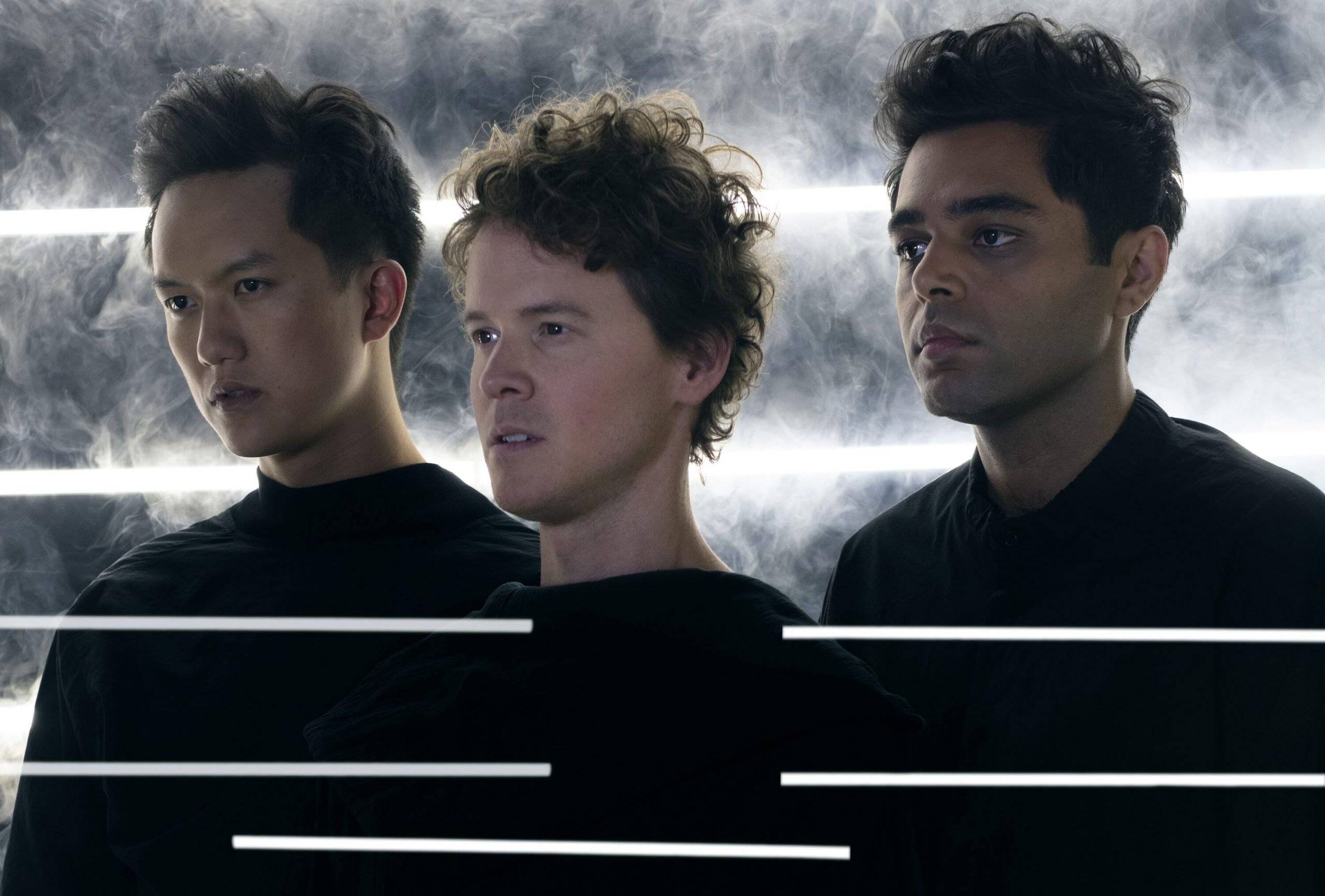
This small part from the press release sums up an excellent portion of the release’s intensity. It will not be difficult for those familiar with Son Lux (Ryan Lott, Rafiq Bhatia, and Ian Chang) materials to recognize the different necessary levels of helpful approach to appreciate their songs. Tomorrows is not an exception, starting from the nine months that have characterized the publication. On balance, we think that we are facing the most complete and high album from the trio.
We’ve reached them during the gestation period between the second and the third parts of the project, questioning them on the true essence of their last work. Born of an active, intentional approach to shaping sound, new Son Lux’s music reminds us of the necessity of questioning assumptions, and of sitting with the tension. This is the result of our Q&A session.
“Tomorrows” is a big project that covers a very long period, with contemporary themes. The end is set for April 2021, when we will be in the global dawn for a new and better (or worst?) world. How do you approach music composition and the content sense of your lyrics in this fast-changing reality? Are all the three parts ready when releases started? Or do you deliberately gain time space between the volumes to make changes?
RB: While the three parts weren’t fully complete when we began releasing music—in fact, we just finished the third volume a couple of weeks ago!—we have been working on all of this music in parallel over the past few years. In addition, there are a lot of interconnections between the recordings that we took great care to plant the seeds for prior to releasing anything. That combination of factors has allowed us to create something very structured, but in a way that lets the particulars of the moment inform the particulars of that structure.
Handling departures, abandonments is not easy. With covid19, everybody experiences terrible and unexpected goodbye. These songs can provide a sort of therapy to heal these losses. Is this one of the main motivations for your project?
IC: I think that any therapeutic effects the music may have is a byproduct of the fact that the music and lyrics in Tomorrows are an honest reflection of how we’re navigating these times, and processing the change. In other words, the main goal is to make the best and most honest music we can, and if that can act as a salve for some people, that is amazing and validating.
Today human relationships are the great unknown. This year’s difficulties bring us near or away from each other?
IC: I would say it’s definitely a complicated combination of the two. While we are all physically more distanced, the shared experience of isolation is something that I think we will carry with us for a long time in ways we don’t even comprehend yet.
Discographical and commercial considerations about Tomorrows: a prolonged exposure can affect the artistic value of the project? Can a TV seriality scheme change the logic of the music market?
IC: The main impetus for doing a three part release is that it gives us more room to explore some different creative and collaborative avenues. One thing in particular we were very keen on exploring was making instrumental tracks, and finding ways to create thematic development across three volumes of a larger body of work. In a way, the three part album does feel analogous to a short TV series vs an album which is more like a movie.
Best music dimension is always a live concert? Home and solitary listening seem the ideal form to approach projects like Tomorrows. Do you agree?
RB: You’ll have to tell us what you think after you hear the music live! We’re hoping to be able to share this music in that format once it becomes safe to do so. One thing we try to do is to approach the studio and the stage with the recognition that they are distinct formats, and that things that work well in one may not translate in the other.
Tell us more about the visual concept of Tomorrows. How did you choose the artworks?
IC: We were very struck by Mareo Rodriguez’ work and how it deals with different kinds of contrasting and polarizing forces: light and dark, smooth and rough textures, heaviness and weightlessness. It resonated with us and how we approach sculpting sounds, so we decided to use some of his existing works for the album artworks, which is something we’ve never done! Using that as a creative launching pad, we worked with graphic designer Yuanyuan Su on a series of floating rock/crystal images as well as the Tomorrows font and logo.
“Plans We Make” is the project which sees you take turns speaking with guests about a shared theme in three volumes: Technology, Collaboration, and Voice. How was born this idea?
IC: When COVID hit, we brainstormed some different kinds of projects that we could do to expand the culture around our music, especially since any normal kind of touring is out of the picture. It’s been a real blessing in these socially distant times for us to engage with and share space with some of our favorite creators through this podcast.
Recently, Ryan scored a soundtrack for an intriguing videogame, Tell Me Why. What are the differences between composing for an album, for a film, or a videogame?
RL: Games are unique because scoring a gameplay sequence is like generating a musical puzzle with enumerable solutions and possible outcomes. It’s composing in 3D (where film is composing in 2D). Both are very different than making an album, because the score exists to serve the visual aspect (the narrative and emotional texture, etc.). Some of my favorite musical discoveries have been made in the context of scoring, though. Like in life, many interesting choices emerge when you focus on serving something other than yourself.
Let’s talk about the current situation. How are you living these strange times and what are the main concerns as a band?
RB: We’ve all been very fortunate and privileged to have our health intact and to have the space and infrastructure in place to keep creating throughout the past year. The three of us actually live in totally different parts of the US—Ian is in Dallas, Ryan lives in LA (but has been in Indianapolis this year), and I’m in New York—so we were already used to working remotely over distance. And actually, we had been working all together in LA the week right before lockdown began, which was a super productive time for us.
During and after the lockdown time, Bandcamp was the only online platform which tried to help musicians, waiving their fees on the site on the very first Friday of the month. What do you think of this kind of initiative and how is your idea about the rights of artists connected to streaming platforms?
IC: Bandcamp really stepped up to the plate, and is the only platform that I feel truly cares about artists. We’re all big fans. The way streaming platforms have further devalued recorded music isn’t right, but it is a reality that I’ve personally come to accept to some degree. Something that I would love to see develop over time is for artists to have greater agency over how the data our work generates is used.
Ritual question. Have you seen or heard anything good recently? What are your favorite albums of this year?
RB: Right now I can’t stop watching this video of Erroll Garner on loop—the part starting at the 3:00 mark. Lately, we’ve been feeling new albums from Holland Andrews, Sam Dew, Clifton Joey Guidry III, Black Taffy, and others. But I actually spent a lot of time with Ian’s first solo album, 属 Belonging, last year—to me it feels like a really special record and I hope anyone who is a fan of our music will give it a spin.
Tomorrows III, is out on April 16th via City Slang. The deluxe physical edition of the Tomorrows series will be released on July 30th.


